Context
The comment is only part of the request.
Each workbench card brings together the reviewer thread, target paragraph and expandable surrounding context. Supporting PDFs, spreadsheets or Word files can be attached to an individual thread.
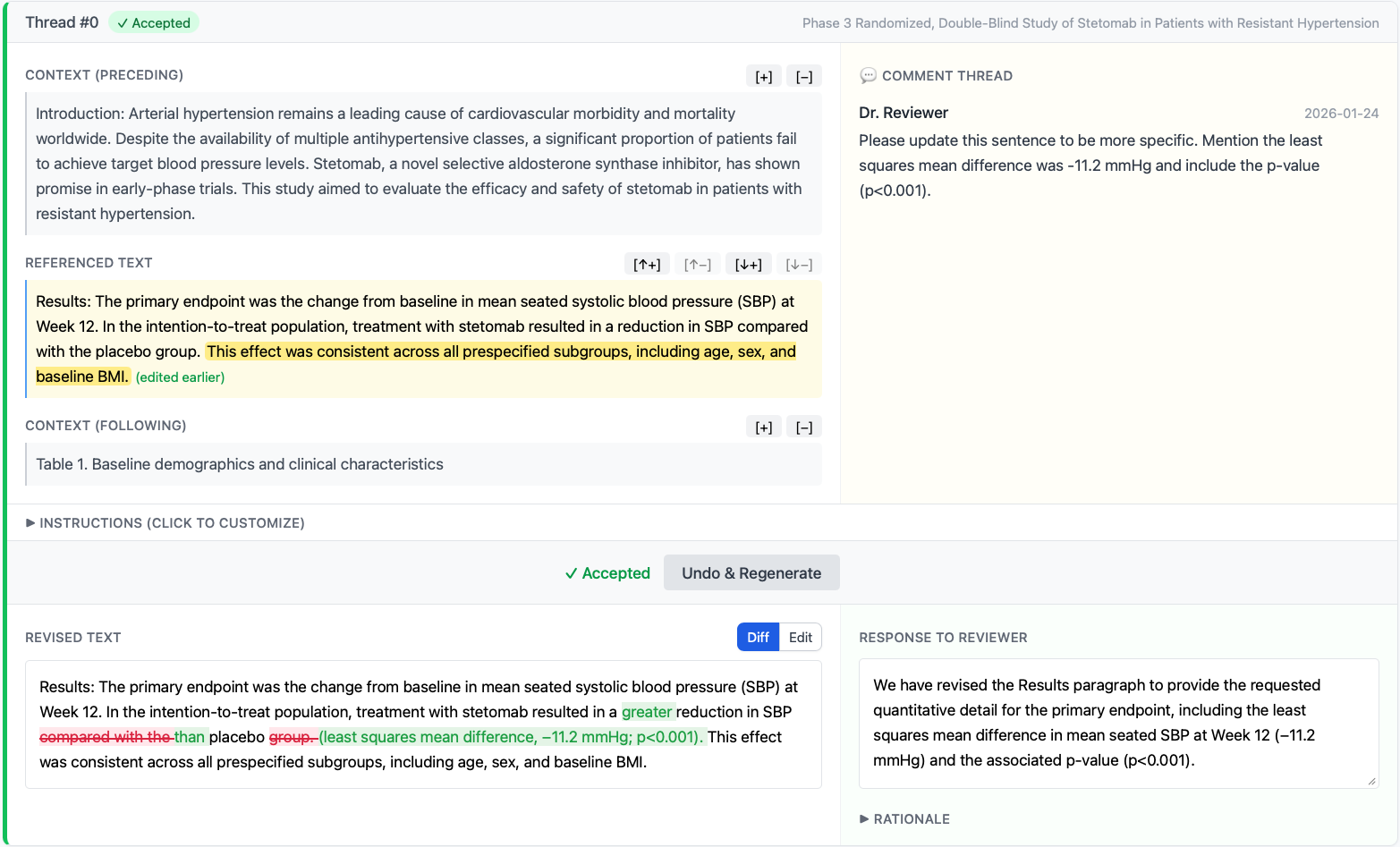
Flagship product · Functional desktop application
Word-native manuscript review automation for medical writers.
Stet reads reviewer comments and their context, drafts a revision and reply, gives the writer control over every suggestion, then exports the result as a real Word document with tracked changes and threaded replies.
546+
automated tests
102
comment stress test
.docx
native Word output
The problem
A medical writer handles reviewer comments one thread at a time: understand the request, inspect the surrounding manuscript, consult a source where needed, write a tracked revision and respond in the comment thread.
Generic AI chat breaks that workflow. Context has to be copied out manually, and pasting the answer back into Word does not create the revision history and comment structure the review process depends on.
Some documents also cannot be sent to an unapproved external API. The useful solution therefore has to address the document format, the human review loop and the deployment policy—not only produce plausible text.
The workflow
Stet reads the OOXML package, including comments, existing revisions, paragraph structure and reference-manager field codes.
The model receives the comment, target text, surrounding paragraphs and any source file attached to that thread.
The writer sees a red-and-green diff, can refine the response and decides what enters the in-memory document model.
Stet creates a new .docx containing native tracked revisions and replies nested under the original comments.
Context
Each workbench card brings together the reviewer thread, target paragraph and expandable surrounding context. Supporting PDFs, spreadsheets or Word files can be attached to an individual thread.
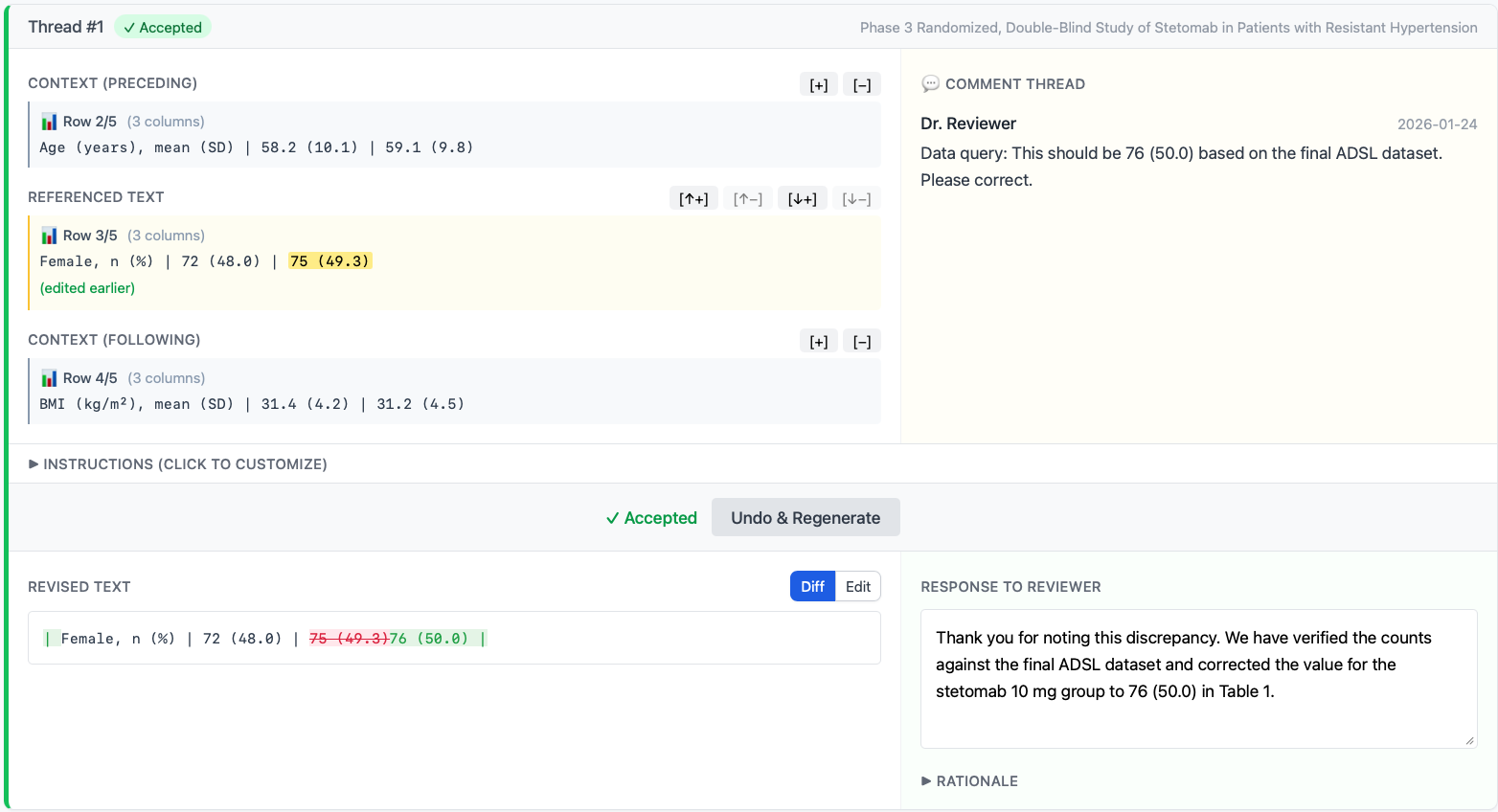
Structure
The application works with the manuscript’s internal structure so tables, formatted runs, images and citation fields can survive the round trip through review and export.
Output
The exported document contains real w:ins and w:del revisions that Word can accept or reject, plus replies threaded under the original reviewer comments.
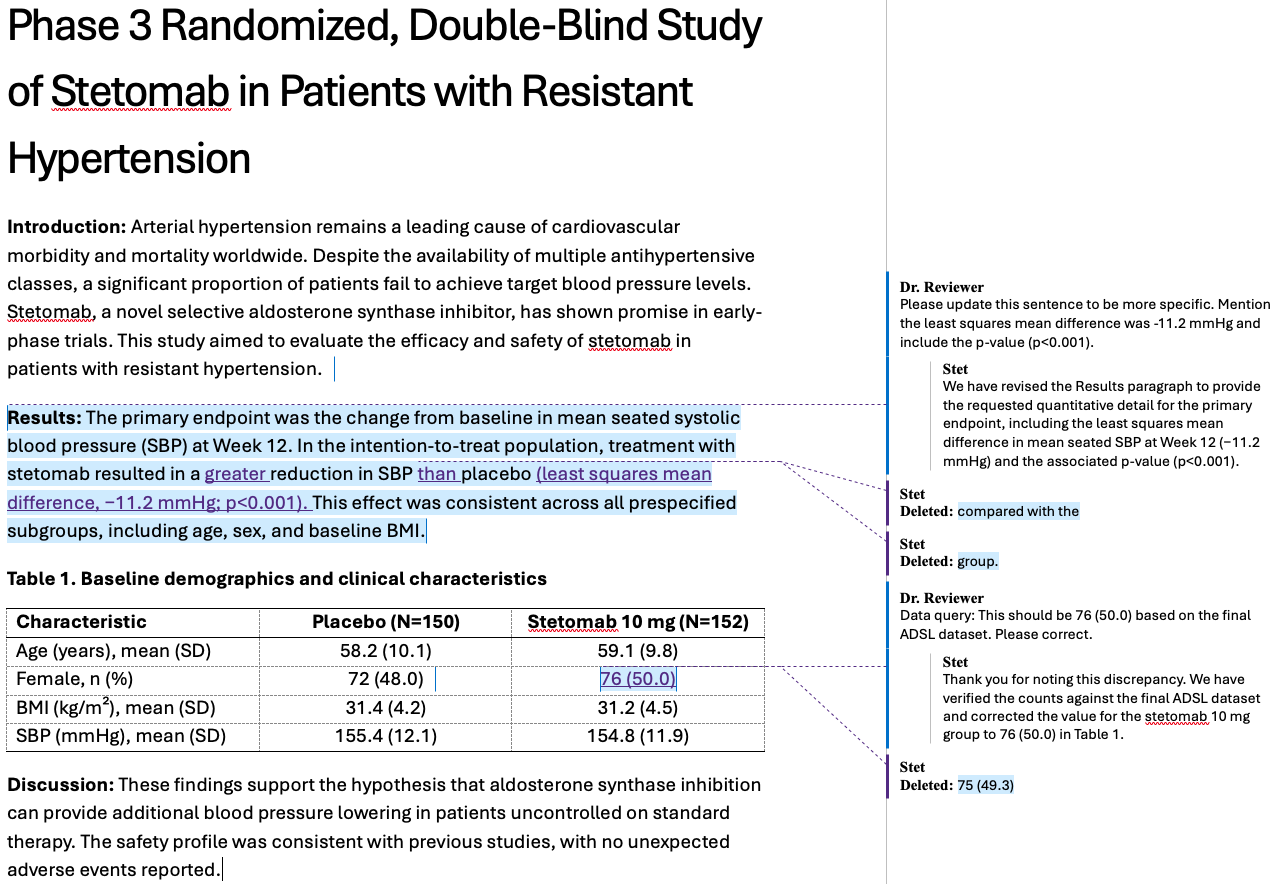
The technical work
Stet uses a custom parser and serializer built with lxml and zipfile. It works directly with the OOXML parts that represent the manuscript, revision markup, comment threads and citation fields.
Insertions and deletions are written as native OOXML revision elements rather than visual approximations.
Replies are written across the Word comment parts and anchored back into the document.
EndNote and Zotero field codes are protected through paragraph editing and export.
When multiple suggestions are accepted in sequence, later comments can see the accepted text that came before them.
Evidence
The original card-based application has been packaged as a Windows executable and demonstrated to industry. Automated coverage exceeds 546 tests. Stet has been tested using manuscripts with demanding reviewer-comment workloads, including a 102-comment test document.
These are technical validation points, not claims of measured customer time savings. A production benchmark remains to be completed.
Deployment
Stet can run against a local model through Ollama, keeping manuscript content on the machine. OpenAI is also supported where the client’s policy, configuration and contractual controls permit its use.
Retention, model training and data-handling characteristics therefore depend on the selected deployment—not on a universal product claim.
Ongoing development
A second-generation workspace is in development, built around folder-level reference files and a tool-calling document agent. Stet is now looking for its first production deployment: a live manuscript taken through to closeout with an agency partner.
Stet is one example of designing around the document format, the reviewer and the organisation’s data policy together.
Discuss a document workflow